
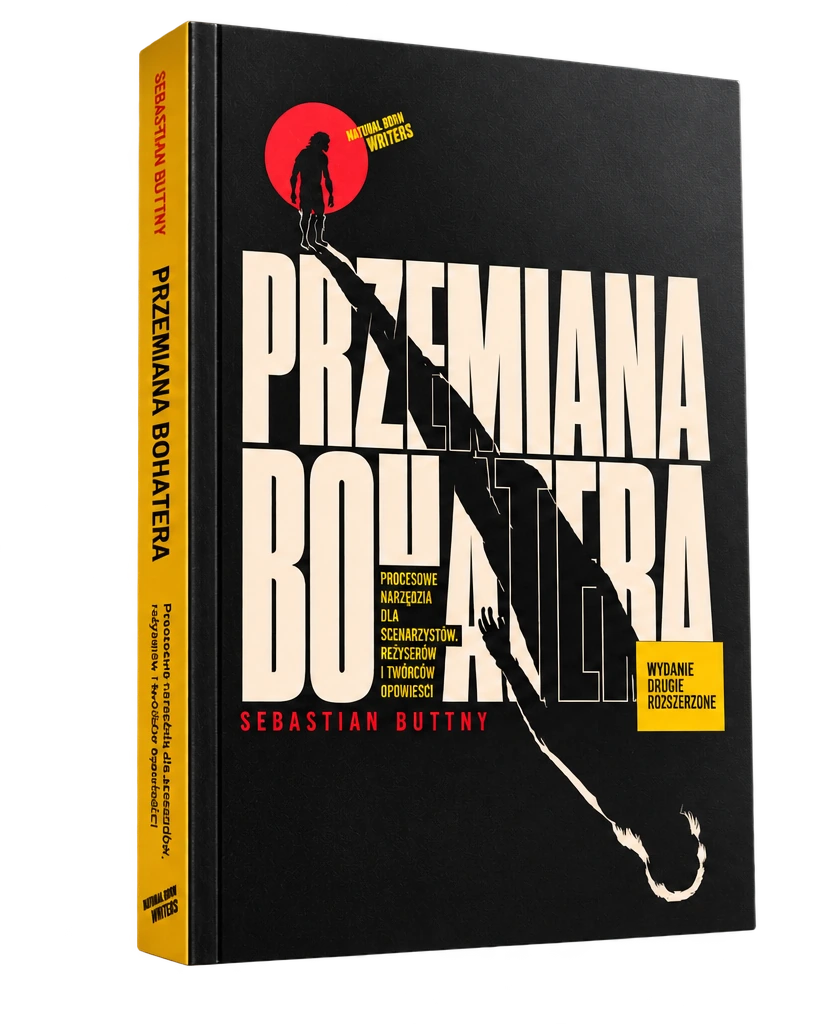
Protagonist Transformation
directors and storytellers
About the book
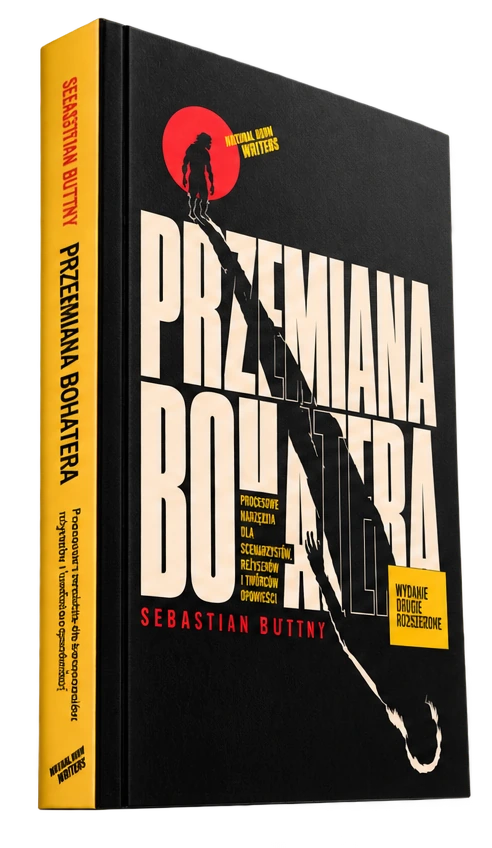
The expanded second edition of Protagonist Transformation by Sebastian Buttny is a handbook on creating characters whose transformation feels credible.
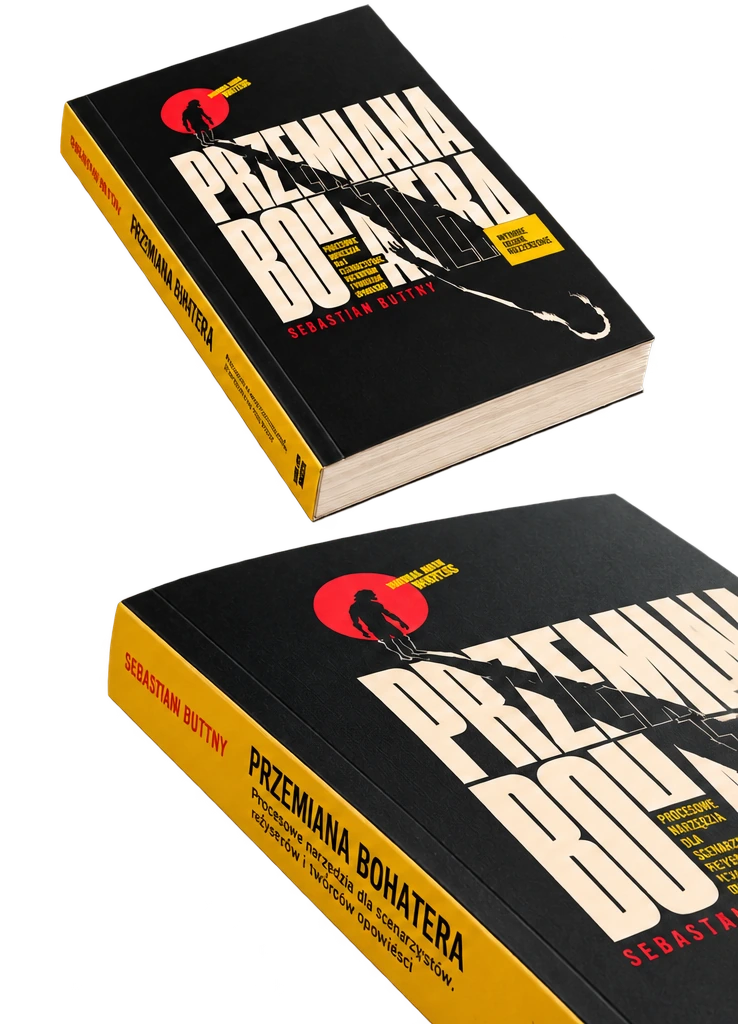
PAPERBACK
The starting point is not a structure into which the protagonist is forced, but the protagonist themselves: their identity, what they do not yet know about themselves, and what drives them toward change.
The book grows out of years of creative and teaching practice, at the meeting point of filmmaking, screenwriting and psychology. It does not reject three-act structure or the hero’s journey; it reveals what is happening inside them at the level of inner process.
For screenwriters, directors, script consultants, script doctors and creative producers. For actors. For authors of prose, theatre, comics and role-playing games. For film scholars and cinephiles. For viewers who want to understand what is really happening to a protagonist on screen.
Process-oriented storytelling
The book is grounded in Arnold Mindell’s process-oriented psychology.
This therapeutic approach emerged in the 1970s from Jungian psychology. Here, its concepts are translated into the language of story development and character transformation.
The protagonist is understood as someone organized around a primary identity, while rejecting another side of themselves: the side where their greatest potential often lies. The tension between these two poles becomes the engine of change, and the stages of the story become stages in the escalation of that tension.
Dramatic structure and process psychology
On the left: concepts familiar from screenwriting manuals.
On the right: what is happening inside the protagonist at the same moment.
The book is largely an account of how these two orders connect.
Tools
The book translates key concepts into practical tools, with exercises at the end of each chapter for the reader’s own project. Below are several process-oriented tools that return throughout the book.
maps the tension between who the protagonist is at the beginning and the direction in which their transformation process is moving.
a complete map of narrative elements, shown step by step through The Silence of the Lambs.
a question that draws out what the character does not know about themselves, and what the writer already knows but has not yet brought into consciousness.
a tool for revealing thresholds and creating narrative elements that help the protagonist cross them.
image, sound, movement, body, relationship and world: the channels through which the protagonist’s process becomes visible and audible.
a process-oriented way of building dramatic tension that also shows where a scene wants to go.
The book is grounded in Mindell, but also moves through Jung, Campbell, Eliade, van Gennep, Bateson and Aristotle. The bibliography contains fifty entries.
441 pages, 12 chapters, exercises at the end of each chapter.
Download an English excerpt from the book: chapter three, “How to See the Invisible Story”, twelve pages with an analysis of The Truman Show.
Second edition
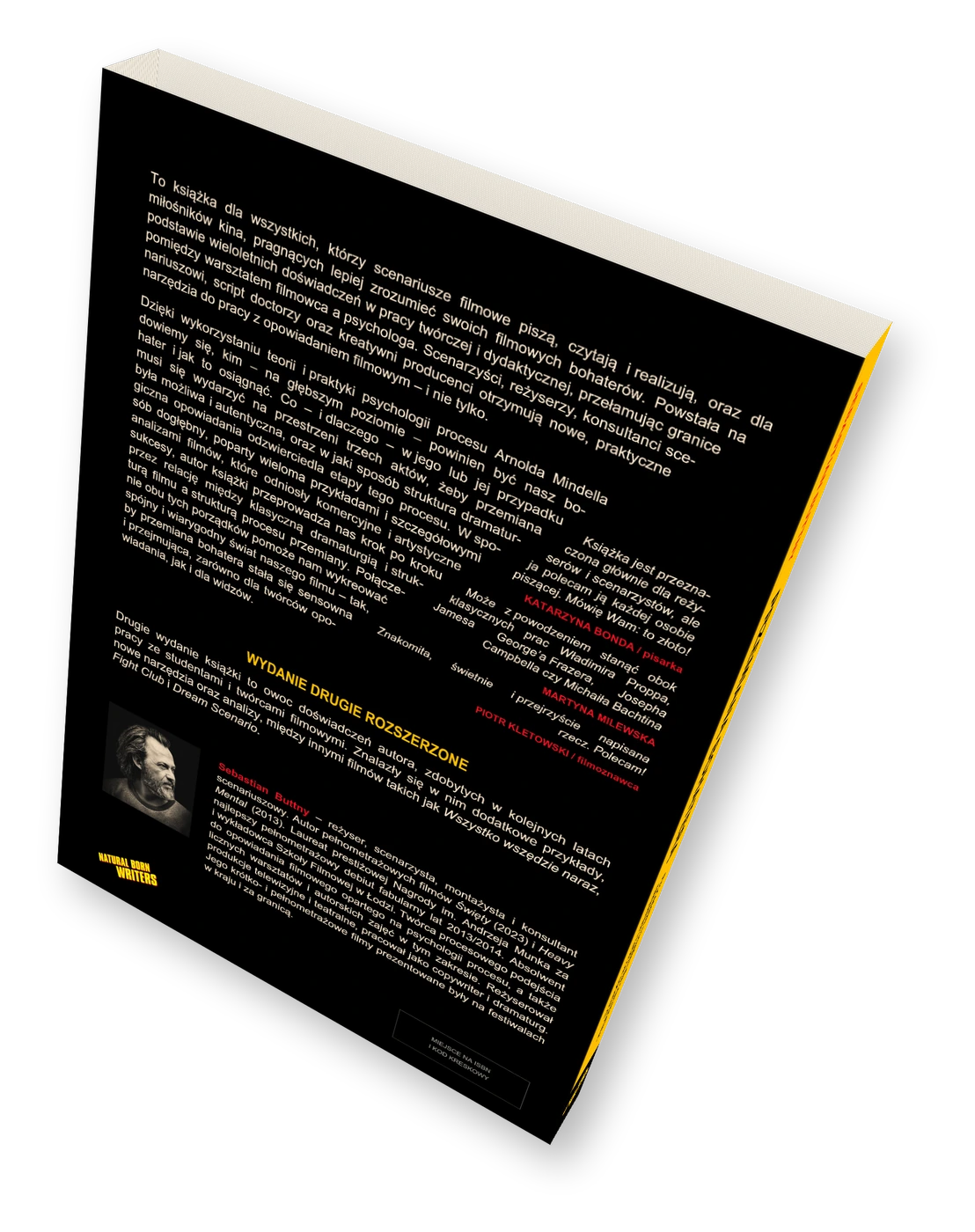
The second edition is almost one hundred pages longer than the first.
It adds a new tool, four new full film analyses and new examples, while expanding discussions from the first edition.
a new tool showing the tension between who the protagonist is at the beginning and the direction in which their transformation process is moving. It sharpens the examples from the first edition and makes work on one’s own project more practical.
Everything Everywhere All at Once, Fight Club, Dream Scenario, Matthias & Maxime.
including Buffalo ’66 and Midsommar, as well as new examples from Blue Velvet.
the protagonist’s psychological mechanism and the corresponding screenwriting solution laid out side by side, step by step.
Films analyzed
The book discusses twenty-one films, from Ashes and Diamonds to Everything Everywhere All at Once.
Six titles were added in the second edition.
21 TITLES
Reviews
“You will find here a set of remarkably precise tools for building characters and story structure, as well as insights that are invaluable in creating a deep story that keeps the reader engaged.”
“The author does not overturn proven models or call them into question.”
“It is a refreshing thought experiment that allows us to see a story emerging from the protagonist, rather than one algorithmically fitted onto them.”
“He dug through enormous amounts of material: books, films, studies and conversations with specialists. He combined this with years of learning these tools in film schools and with his own experience as a director, and then shaped it all into a book.”
“An outstanding screenwriting handbook that deepens existing models of screenplay writing, especially the anthropological models associated with Campbell and Vogler, through Arnold Mindell’s psychological model of process.”
“The protagonists of the films and series we watch search for meaning, existential truth, the motivation to keep going, love and the fulfillment of their dreams.”
Author
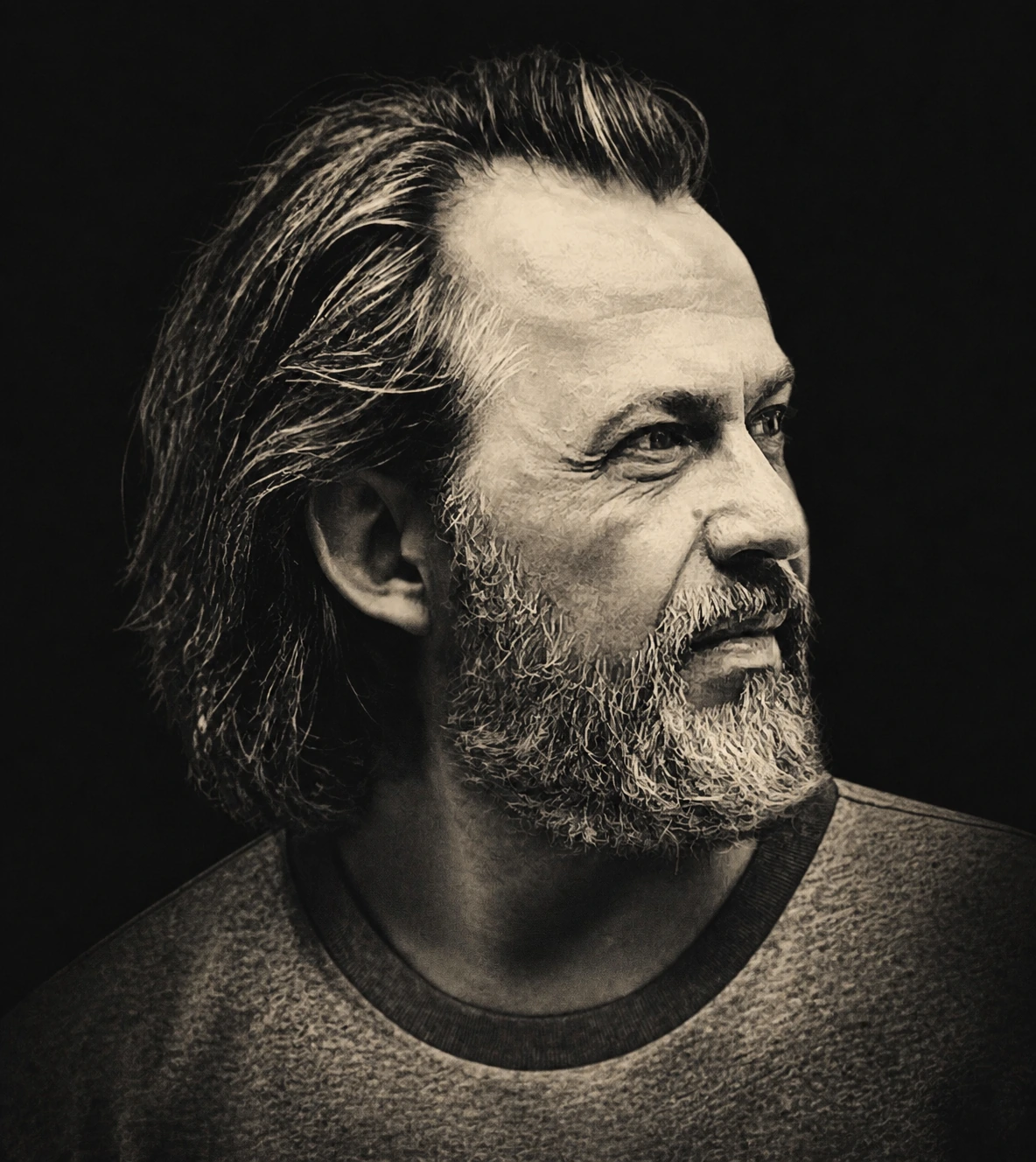
director, screenwriter, editor and script consultant. A graduate of and lecturer at the Lodz Film School, creator of a process-oriented approach to film storytelling and author of workshops devoted to this method.
Natural Born Writers is an original podcast “by screenwriters, for screenwriters”, created by screenwriter Bruno Hawryluk. It has been available on Spotify and Apple Podcasts since June 2022, and now also on YouTube and Spotify in video form. NBW is now also becoming a publishing house.
NBW features conversations about screenwriting, directing, film production, distribution, storytelling and narratology, as well as good practices in the audiovisual industry, the rights of Polish filmmakers and changes in the market: online royalties, new private copying levies and artificial intelligence.